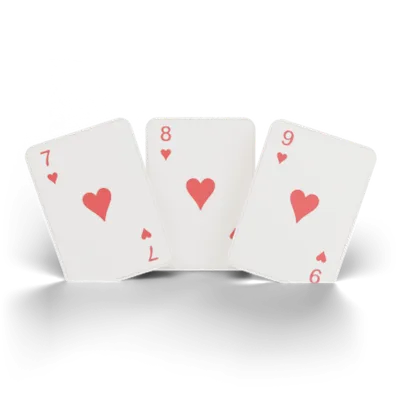
What is Gin Rummy?
Gin Rummy is a classic two-player game from the rummy family, where players collect cards into matching groups called melds. Unlike Canasta and many other rummy games, your melds stay hidden in your hand until the hand ends. That makes every pickup and every discard a clue about what the other player is building.
It suits two people who want a real choice on every turn. The draw brings luck, but skill decides when to take a discard, what to throw away and when to knock. Each hand is short, and the running score to 100 makes every hand count.
How to set up
- Pick a first dealer. After that, the winner of each hand deals the next.
- Deal ten cards each, one at a time.
- Turn the next card face up to start the discard pile. The rest is the stock.
- The non-dealer, then the dealer, may take the face-up card and discard one. If both pass, the non-dealer draws from the stock.
How a turn works
- Draw one card: the top of the stock or the top of the discard pile.
- Build melds in your hand: three or four of a rank, or three or more in order in one suit.
- Discard one card face up, so you hold ten again.
- Cards outside your melds are deadwood. With 10 points or less after your discard, you may knock instead: discard face down and lay out your hand.
How to score and win
- Deadwood counts: Aces 1, number cards their number, and 10s, Jacks, Queens and Kings 10.
- After a knock, the other player may lay off: add leftover cards to the knocker's melds. Then the knocker scores the difference in deadwood.
- If the other player ends equal or lower, they score the difference plus 25. Gin, zero deadwood, scores their deadwood plus 25, with no laying off.
- First to 100 points wins. If a player takes the stock down to two cards and discards without knocking, the hand ends and nobody scores.
Watch for
- Aces are low: A-2-3 is a run, Q-K-A isn't.
- One card can't be in two melds.
- Don't discard next to a card your opponent just picked up.
- Don't knock at 9 or 10 against someone who has been quietly taking discards.
Learn Gin Rummy by playing it
A two-minute intro, read aloud, shows how Gin Rummy is dealt and played. Then play a whole hand with a coach who names every move, and a second one where you make the calls and each gets a grade. 6 short lessons with quizzes cover the rest.
Get Learn to Play Cards, free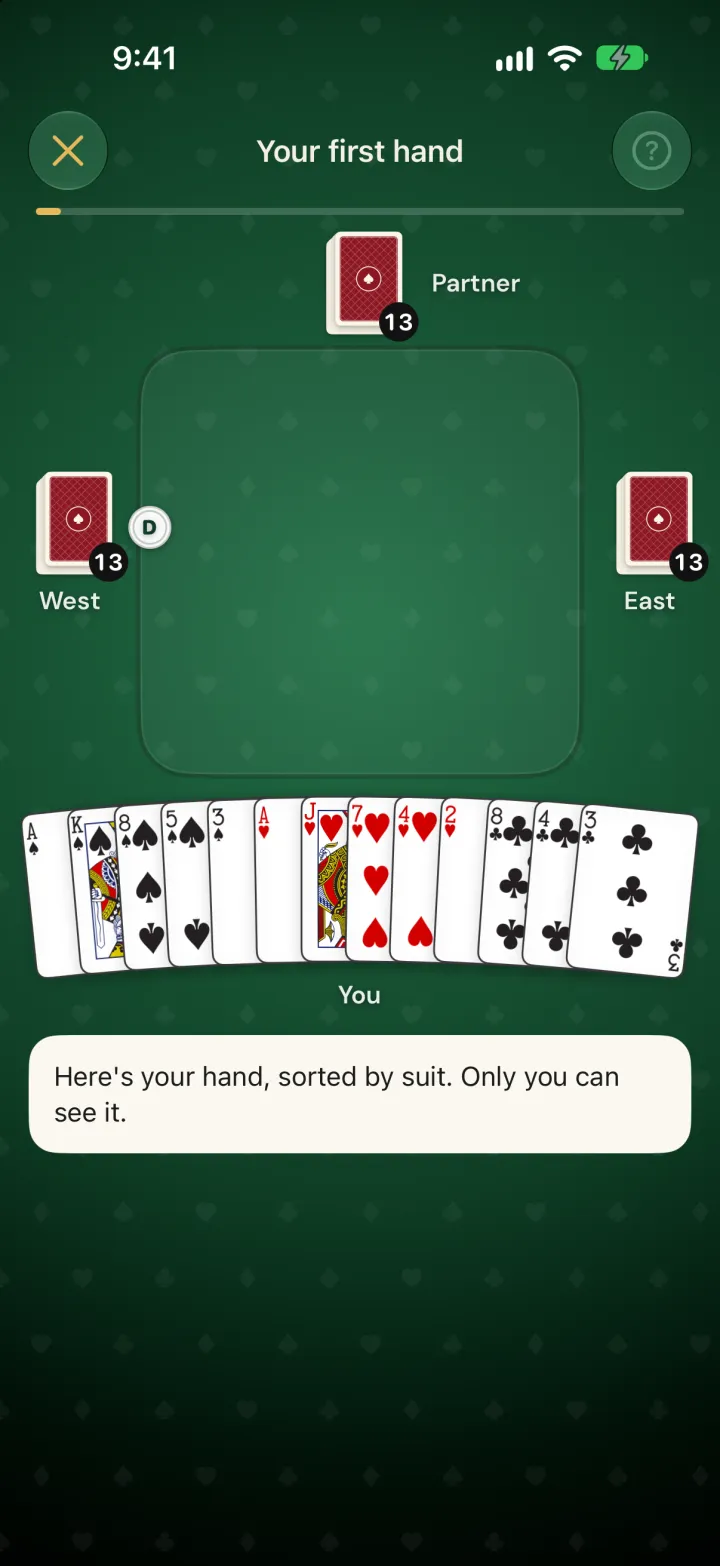
Beginner tips
- Throw away high cards that aren't close to a meld early. A King or Queen left in your hand costs 10 points if your opponent knocks.
- Keep middle cards like 6s, 7s and 8s early in a hand. A 7 can grow into a run in either direction, while a King can only grow one way.
- Take from the discard pile only when the card completes a meld. A pickup shows your opponent what you're collecting, while a stock draw tells them nothing.
- As the stock runs low, knock as soon as you're allowed. Waiting for gin late in a hand is how hands end with nobody scoring.
House rules and variations
Game and box bonuses
Many players add 100 points for winning the game and 25 for every hand each player won. If the loser never won a hand, the game bonus doubles to 200.
Oklahoma Gin
The first face-up card sets the knock limit for the hand: a 4 means you can knock with 4 or less, a 10 or face card keeps the usual 10, and an Ace means gin only. Many games also double the hand's score when that card is a spade.
Straight Gin
There's no knocking at all. A hand ends only when someone goes gin.
Big gin
If all eleven cards fit into melds right after you draw, some tables let you lay them all down without discarding, for a 31-point bonus.
Gin Rummy questions
How do you play Gin Rummy with 2 players?
Gin Rummy is always played by two players. Deal ten cards each, one at a time, and turn the next card face up to start the discard pile. The non-dealer gets the first chance at that card. After that, each turn you draw from the stock or the discard pile, then discard one, working your hand into melds.
What is deadwood in Gin Rummy?
Deadwood is any card in your Gin Rummy hand that isn't part of a meld. It counts against you: Aces are 1, number cards their number, and 10s, Jacks, Queens and Kings 10 each. You need 10 or less to knock and zero to go gin.
When can you knock in Gin Rummy?
You can knock in Gin Rummy when your deadwood totals 10 points or less after your discard. Discard face down, then lay out your melds and deadwood. Your opponent lays out their hand and may lay off, adding their leftover cards to your melds, before the scores are counted.
What does gin score in Gin Rummy?
In Gin Rummy, going gin scores your opponent's deadwood plus a 25-point bonus. Gin means all ten of your cards are in melds with zero deadwood, and your opponent can't lay off any cards on your melds. Against 32 points of deadwood, gin scores 57.
What is an undercut in Gin Rummy?
An undercut in Gin Rummy happens when you knock and your opponent's deadwood, after laying off, is equal to yours or lower. They score the difference plus a 25-point bonus, and you score nothing. If you knock with 9 and they finish with 7, they score 27.
What's the difference between Rummy and Gin Rummy?
Gin Rummy is one game in the rummy family, where players collect cards into melds. In Gin Rummy, two players hold ten cards each and keep their melds hidden until someone knocks or goes gin. In many other rummy games, such as Canasta, players lay melds face up on the table during play.
Words to know
- Deadwood
- Cards in your hand that are not part of any meld. The total point value of your deadwood determines whether you can knock and how many points are scored at the end of a hand. Lower deadwood is always better.
- Meld
- A valid combination of 3 or more cards. Melds come in two types: sets (same rank, different suits) and runs (consecutive cards of the same suit). Cards in melds do not count as deadwood.
- Set
- A meld consisting of 3 or 4 cards of the same rank but different suits. For example, three 9s (9 of Hearts, 9 of Clubs, 9 of Spades) form a valid set. Also sometimes called a "group" or "book."
- Run
- A meld consisting of 3 or more consecutive cards of the same suit. For example, 4-5-6 of Diamonds is a valid run. Aces are always low (A-2-3 is valid, but Q-K-A is not). Also called a "sequence."
- Knock
- The action of ending a hand when your deadwood total is 10 points or fewer. After knocking, both players reveal their hands, the defender may lay off cards, and points are scored based on the deadwood difference.
- Gin
- Achieving 0 deadwood by melding all 10 cards in your hand. Going Gin earns a 25-point bonus and prevents the opponent from laying off cards. It is the best possible way to end a hand.
- Undercut
- When the defender (non-knocking player) has equal or lower deadwood than the knocker after laying off cards. The defender earns the deadwood difference plus a 25-point bonus. Undercuts punish reckless knocking.
- Lay Off
- Adding your unmatched cards to your opponent's melds after they knock (but not after Gin). Laying off reduces your deadwood and can even lead to an undercut. You can extend sets to 4 cards or add to either end of runs.
- Stock Pile
- The face-down pile of undealt cards in the center of the table. Players draw from the stock pile when they do not want the top card of the discard pile. Drawing from the stock keeps your strategy hidden from your opponent.
- Discard Pile
- The face-up pile where players place one card at the end of each turn. Only the top card is available for drawing. Taking from the discard pile reveals information about your hand to your opponent.